Guitarists are still willing to pay more for guitars built with traditional tonewoods even as rosewood, mahogany, and ebony become increasingly scarce and, in some cases, endangered, according to new research.
The study, which analyzed 2000 second-hand guitar sales on the Japanese Aucfan site over a year, found this desire for ‘traditionality’ applied to both higher-priced Martin acoustic guitars and Yamaha acoustics (the study authors viewed Martin as a high-end brand and Yamaha as a lower-cost, mass market brand). The sample included 146 Martin D-28 Dreadnoughts and five Yamaha FG-122 folk guitars.
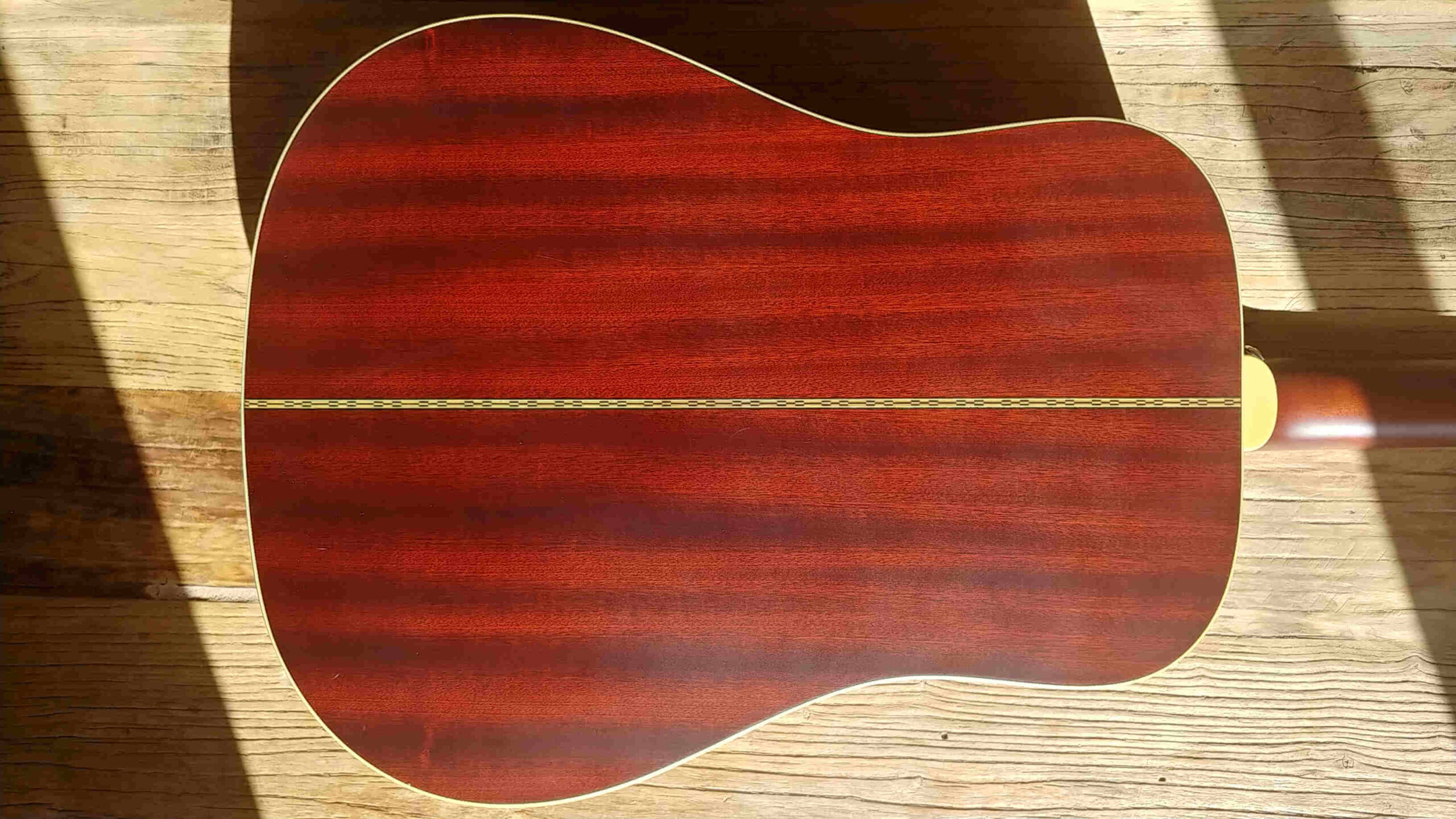
“Ebony, rosewood, mahogany, and palisander were in accordance with traditionality characteristics and had a positive effect on the price persistence of guitars,” the report said.
“Sapele, HPL [high pressure laminate], and meranti do not have traditionality and have a negative effect on price persistence, consistent with our assumptions.”
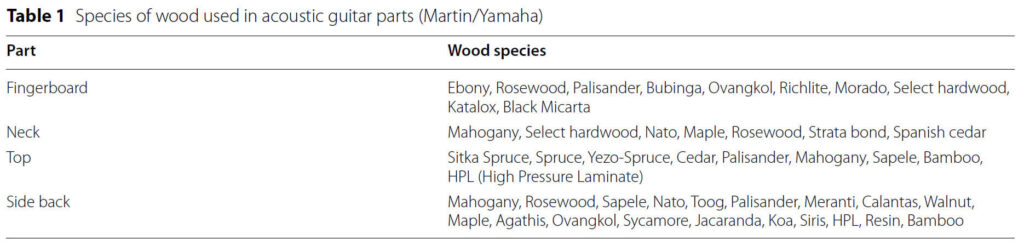
The study’s authors suggested guitar manufacturers should carefully choose how they use newer tonewoods.
“Guitar companies using new materials in their guitars should not use the new materials in all parts of the guitar but instead use them in combination with traditional wood.”
This may help manufacturers increase their sales, but I think guitarists should take a different perspective.
There is an overwhelming amount of research showing that traditional tonewoods have little effect on the sound when used in the back or sides of acoustic guitars, while newer tonewoods can also produce similar sound quality in the hands of experienced luthiers.
This means guitarists can pick up a great deal by considering guitars that use non-traditional tonewoods. The only way to know is to compare how they play and sound against guitars built with traditional tonewoods (preferably without knowing which is which).

Martin Guitars CEO, Chris Martin IV, was onto something when he told Guitar World magazine that the industry has done “too good a job of convincing the vast majority of guitar players that high-end acoustic guitars must be made from rosewood, mahogany, ebony and spruce. and, yeah, they work – but other woods work also.”
Many traditional toneowoods are now listed as “critically endangered” or “endangered”. The Convention on International Trade in Endangered Species (CITES) has, at various times, restricted trade in several traditional tonewoods including Brazilian rosewood, mahogany, and cedar. The standards regularly change making it difficult for guitar manufacturers to plan ahead.
Guitar manufacturers are continuing to experiment with more sustainable wood choices, particularly given the growing body of research on tonewoods.
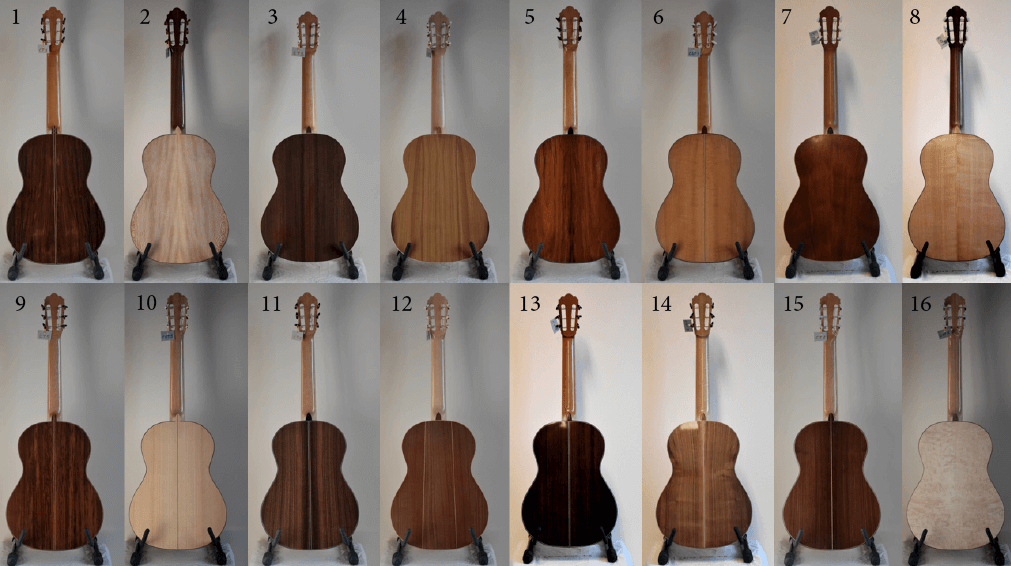
One such test was by Lancaster University researchers, who tested six hand-made steel-string acoustic Fylde Guitars with different back and sides made from Brazilian Rosewood, Honduras Mahogany, Indian Rosewood, Maple, Sapele, and Claro Walnut.
“Overall, our results indicate the species of wood used for the back and sides of a steel-string acoustic guitar has at best a marginal impact on its acoustic properties and perceived sound, and that cheaper and sustainable woods can be used as substitutes of expensive and endangered woods without loss of sound quality,” they said.
The list below shows three of Amazon’s best selling acoustic guitars that are constructed using less expensive tonewoods.